Behavioral Analytics Tools Revolutionizing Safeguards for Players on International Gaming Sites
Written by Ines Perry · Aug 22, 2026
Behavioral Analytics Tools Revolutionizing Safeguards for Players on International Gaming Sites
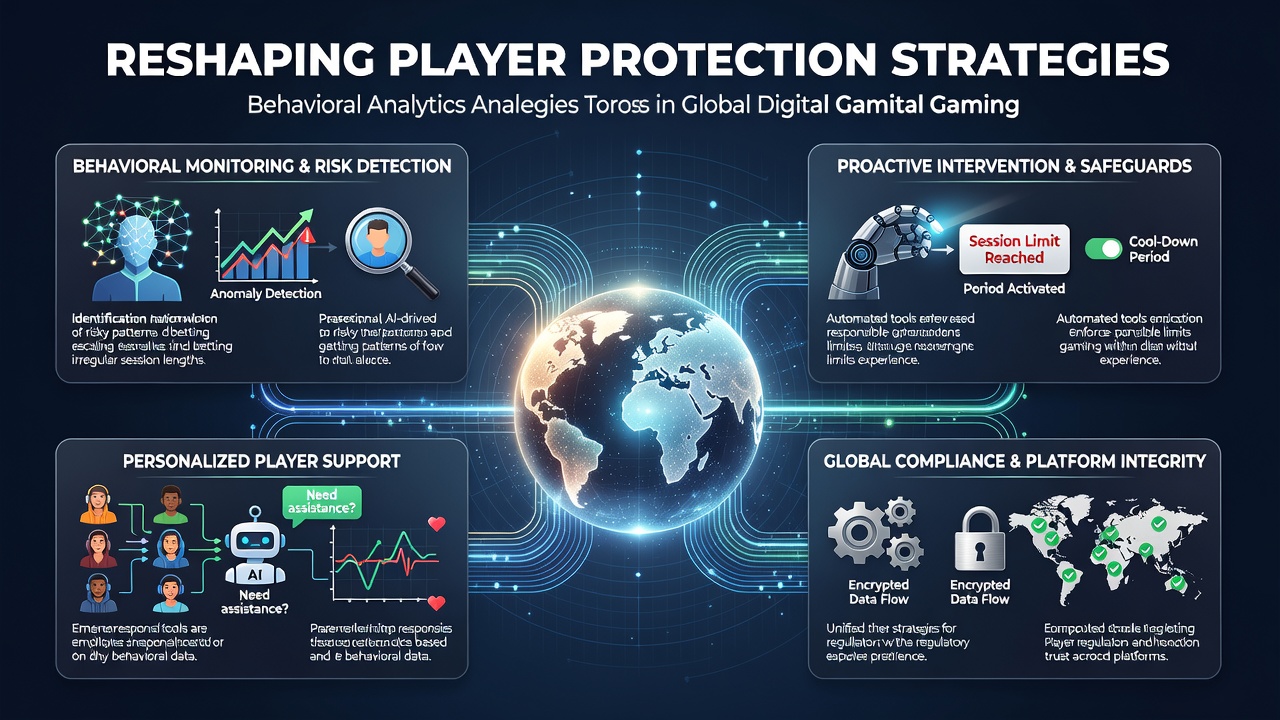
Behavioral analytics tools now monitor player interactions on digital gaming platforms through continuous data collection on session lengths, wager patterns, and login frequencies, and these systems flag deviations that may indicate emerging risks. Platforms integrate machine learning models to process this information in real time, and operators across multiple continents apply the outputs to trigger targeted interventions such as limit adjustments or resource referrals. Data from major markets shows adoption rates climbing steadily since 2023, while regulatory frameworks in several jurisdictions now require operators to demonstrate use of such technologies during licensing renewals.
Core Mechanisms Driving Detection and Response
Algorithms examine sequences of player actions to establish individual baselines, and they compare new activity against those baselines using statistical thresholds that account for time of day, game type, and deposit velocity. When patterns exceed predefined parameters, the system generates alerts that reach responsible gaming teams within seconds, and teams then review context before deploying messages or temporary holds. Studies from research institutions indicate that platforms combining behavioral signals with self-reported data achieve higher accuracy in identifying at-risk accounts than those relying on single data streams alone.
One study revealed that European operators using multi-layered analytics reduced repeat high-risk sessions by measurable margins within the first year of deployment, and similar implementations in North American markets produced parallel outcomes according to aggregated industry reports. The process relies on anonymized datasets during initial analysis, yet operators maintain audit trails that satisfy oversight requirements from bodies such as the Nevada Gaming Control Board and the Australian Communications and Media Authority.
Regional Implementation Patterns Emerging in 2026
By August 2026 several Canadian provincial regulators had updated compliance codes to mandate annual third-party audits of behavioral tools, and these audits examine both false positive rates and intervention effectiveness. Australian platforms meanwhile expanded partnerships with academic centers to refine models for culturally specific play behaviors, and the resulting datasets feed into national harm minimization databases. In the United States, state-level commissions in New Jersey and Pennsylvania require operators to submit quarterly summaries that detail how analytics influenced account-level decisions.

Platforms operating across borders standardize certain data fields to enable cross-jurisdictional comparisons, while local rules dictate the precise timing and content of player communications. Observers note that unified technical standards reduce implementation costs for international operators, and they also create clearer benchmarks for measuring progress across different regulatory environments.
Integration with Existing Protection Frameworks
Behavioral systems now sit alongside deposit limits, reality checks, and self-exclusion registers, and the combined approach allows platforms to escalate responses when multiple indicators align. For instance, a sudden increase in night-time play paired with accelerating bet sizes can prompt an automated suggestion to review spending limits, and the player receives this prompt before the next deposit attempt. Research indicates that such layered strategies produce stronger engagement with protective tools than standalone measures, and operators report higher voluntary limit-setting rates after analytics-driven prompts.
Industry associations including the European Gaming and Betting Association have published guidelines that encourage members to share anonymized performance metrics, and these shared figures help smaller operators benchmark their own systems without duplicating expensive development work. Training programs for support staff now incorporate case examples drawn from analytics outputs, and staff learn to interpret alerts while maintaining player confidentiality throughout the interaction.
Technical and Regulatory Challenges Addressed
Data privacy regulations such as the EU General Data Protection Regulation require explicit consent mechanisms and data minimization practices, and platforms satisfy these rules by processing only the minimum variables needed for risk scoring. False positive rates remain a focus area, and developers continue to refine models using feedback loops from actual intervention results. Regulators in multiple regions conduct periodic reviews of algorithm transparency, and operators must provide documentation that explains decision logic to auditors without exposing proprietary code.
Cross-border data transfers add another layer of compliance, yet standardized contractual clauses and encryption protocols now streamline these movements. Platforms that operate in both Asia-Pacific and European markets have documented reduced latency in alert generation after migrating analytics workloads to regional data centers.
Conclusion
Behavioral analytics continue to expand the toolkit available for player protection across global digital gaming environments, and operators, regulators, and researchers collaborate on iterative improvements that balance effectiveness with privacy considerations. Ongoing data collection and model refinement will determine how these systems evolve through the remainder of the decade, while regulatory updates in key markets set minimum performance expectations that encourage wider adoption.