Biometric Authentication Reshaping Account Protection in Digital Gaming Environments
Written by Alex Friedrich · Aug 19, 2026

Biometric Authentication Reshaping Account Protection in Digital Gaming Environments
Digital gaming platforms have integrated biometric verification systems at an accelerating pace since 2023, with adoption rates climbing as operators seek to address rising account takeover incidents reported across multiple regions. These systems rely on unique physiological traits such as fingerprints, facial features, and voice patterns to confirm user identity during login and transaction processes. Data from industry reports indicate that platforms employing such methods experience measurable reductions in unauthorized access attempts compared to traditional password-only approaches.
Core Mechanisms Driving Adoption
Biometric verification operates through specialized sensors and algorithms that capture and analyze biological data in real time, converting it into encrypted templates stored securely on devices or servers. Facial recognition, for instance, maps key facial landmarks while voice authentication examines vocal characteristics like pitch and cadence. Researchers at institutions including the University of Toronto have documented how multi-modal systems combining two or more traits achieve higher accuracy rates, often exceeding 99 percent in controlled testing environments. Gaming companies deploy these tools to replace repetitive password entries, which frequently lead to user friction and subsequent security lapses.
Platforms in North America and Europe have reported streamlined account recovery procedures where biometrics eliminate the need for lengthy email or SMS verification chains. According to figures released by the National Institute of Standards and Technology in the United States, biometric templates reduce the attack surface available to credential-stuffing campaigns that plague password databases. And yet the transition requires careful calibration of false acceptance and rejection thresholds to maintain both security and usability across diverse user populations.
Implementation Patterns Observed in 2025 and 2026
By August 2026, several major gaming operators had expanded biometric rollouts following pilot programs initiated two years earlier. Mobile applications now prompt users for fingerprint or facial scans at session start and during high-value actions such as withdrawals or item trades. European regulatory bodies, including those under the EU's digital identity frameworks, have issued guidelines encouraging standardized biometric protocols that align with broader data protection requirements. These measures allow platforms to process verifications locally on user devices, limiting transmission of raw biometric data and thereby addressing privacy considerations raised in academic studies.
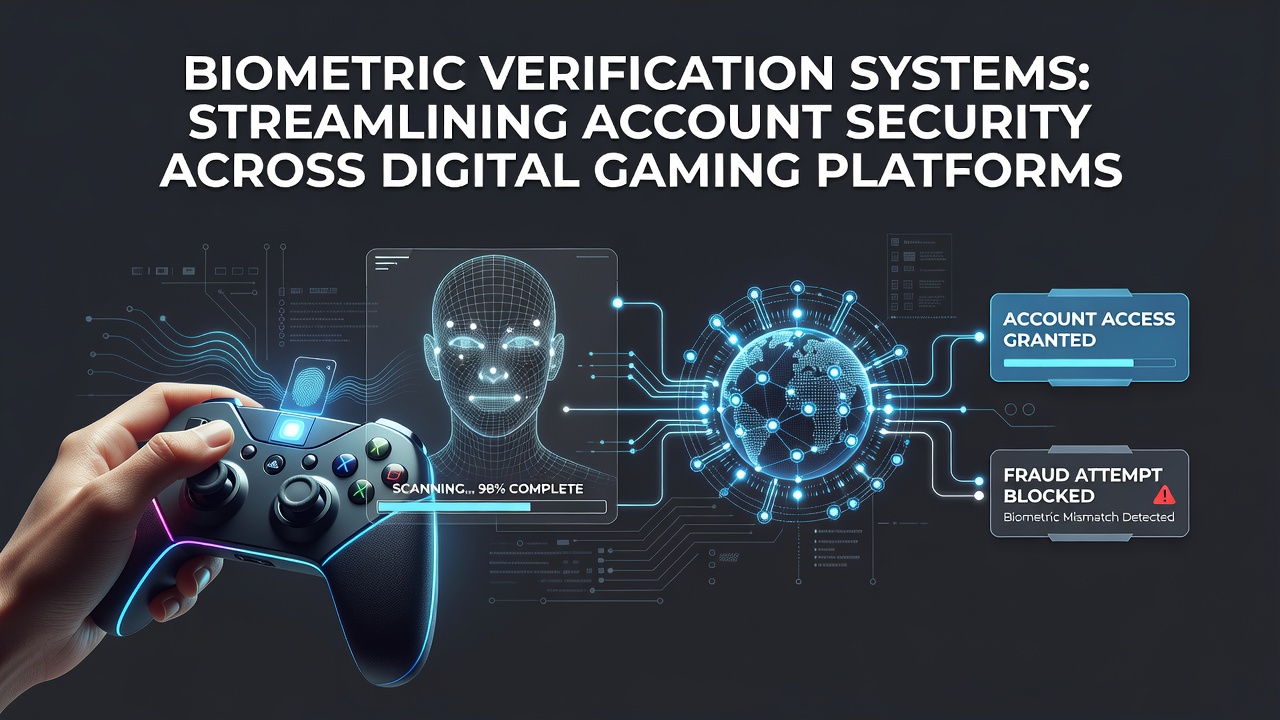
Industry associations such as the Interactive Games and Entertainment Association in Australia have tracked deployment statistics showing that biometric-enabled accounts log in 40 percent faster on average. Observers note that this efficiency gain encourages higher retention among users who previously abandoned accounts after repeated password resets. Platforms also integrate continuous authentication techniques, where subtle behavioral biometrics like swipe patterns or device handling supplement initial scans without interrupting gameplay flow.
Security Outcomes and Supporting Evidence
Evidence from multiple operator disclosures reveals declines in account compromise events following biometric integration. A 2025 report compiled by the Canadian Centre for Cybersecurity highlighted how biometric layers disrupt automated bot attacks that rely on stolen credentials. Those who've analyzed breach data across gaming sectors find that systems requiring live biometric confirmation make large-scale credential reuse far less viable. Voice biometrics, in particular, add an extra barrier during customer support interactions where identity confirmation occurs over calls.
Academic papers published in journals focused on cybersecurity have examined edge cases, including performance variations across age groups and skin tones. Findings suggest that ongoing algorithm refinements, trained on increasingly diverse datasets, continue to narrow accuracy gaps. Regulatory frameworks in Asia-Pacific regions have similarly emphasized transparency requirements, mandating that platforms disclose biometric data handling practices to users at onboarding.
Technical and Operational Considerations
Developers must balance computational demands of biometric processing against device battery life and network conditions. Cloud-based matching offers scalability for high-traffic platforms, while on-device processing appeals to privacy-conscious markets. Hybrid models, which perform initial matching locally and escalate suspicious cases to server verification, have gained traction in recent deployments. Experts affiliated with the European Union Agency for Cybersecurity have published technical specifications outlining interoperability standards that enable cross-platform credential portability without exposing raw biometric information.
Hardware advancements, including improved infrared cameras and ultrasonic fingerprint sensors, support reliable performance in varied lighting and environmental conditions common during mobile gaming sessions. These enhancements reduce failure rates that previously prompted users to fall back on less secure recovery methods.
Conclusion
Biometric verification continues to evolve as a foundational element of account security strategies across digital gaming platforms, supported by measurable reductions in unauthorized access and improvements in login efficiency. Data from government agencies, academic research, and industry monitoring bodies demonstrate consistent patterns of enhanced protection when these systems receive proper implementation and ongoing refinement. As platforms prepare for further growth through 2026 and beyond, integration of multi-factor biometric approaches alongside existing safeguards offers a pathway to sustained security gains without compromising user experience.